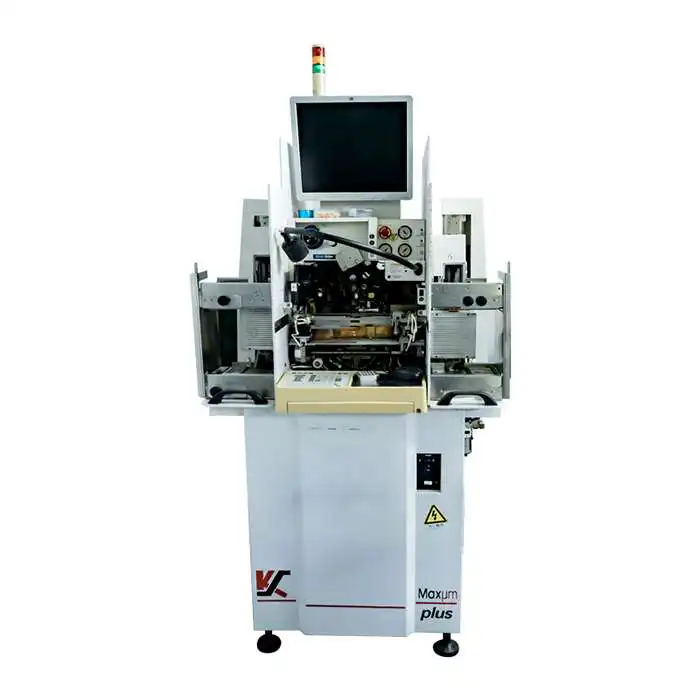
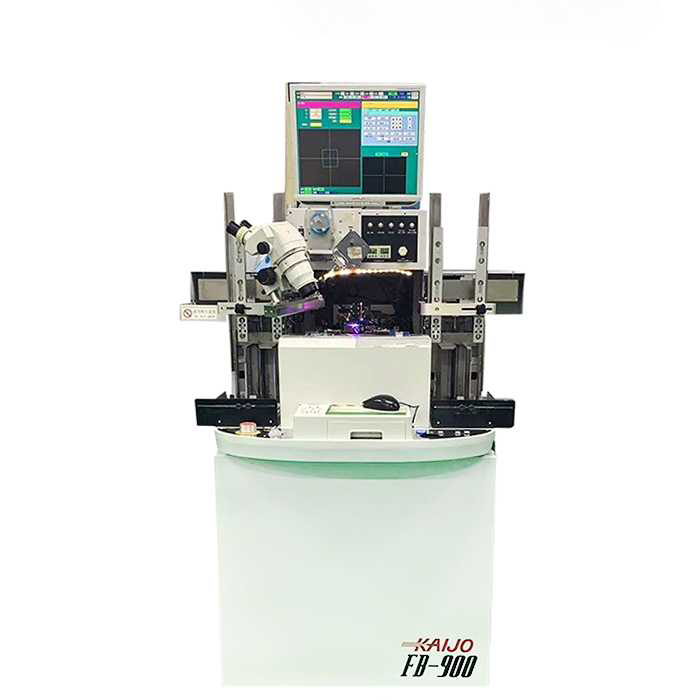
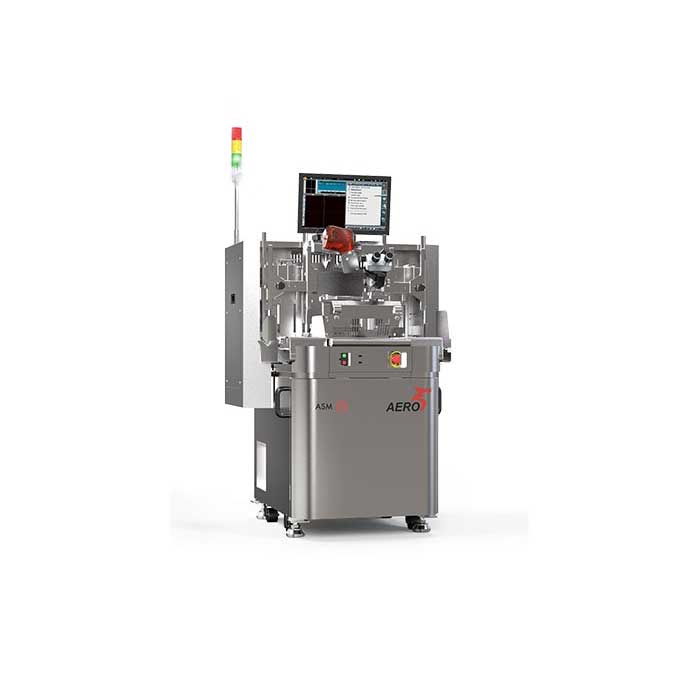
Ball bonders use thermosonic energy (heat + force + ultrasonic vibration) with gold, copper, or silver wire to deliver high-speed, omni-directional bonding for mainstream IC packages (QFN, BGA, QFP, LED). Wedge bonders rely primarily on room-temperature ultrasonic energy with fine or heavy aluminum wire/ribbon—making them the standard choice for power modules (IGBT, SiC), RF hybrids, and ultra-fine-pitch or heat-sensitive devices.
- Speed Advantage: Automatic ball bonders achieve 10–18+ wires/second because the capillary exits symmetrically in 360° without rotating the bond head.
- Power & Thermal Advantage: Heavy-wire wedge bonders handle 100–500 µm aluminum wire and ribbon at ambient temperature for high-current power electronics.
- Sourcing Implication: Choose the platform around pad pitch, current capacity, substrate thermal limit, and metallization before comparing OEM models.
1. Core Process Mechanics: Thermosonic Ball vs. Ultrasonic Wedge
Although both machines create electrical interconnects between semiconductor die bond pads and package leads or substrates, their bonding physics, tool geometry, and cycle-time ceilings are fundamentally different.
1.1 How a Ball Bonder Works
A ball bonder feeds fine wire (typically 15–50 µm Au, Cu, or Ag alloy) vertically through a ceramic capillary. An Electronic Flame-Off (EFO) spark melts the wire tip into a uniform Free Air Ball (FAB). The machine presses the FAB onto a heated die pad (150°C–220°C) with ultrasonic energy to form the first (ball) bond, loops the wire to the substrate lead, and terminates with a stitch (crescent) bond. Because the ball bond is axially symmetric, the capillary can move in any 360° direction without rotating the head—unlocking ultra-high UPH on platforms like K&S IConn / ProCu and ASMPT Eagle series.
1.2 How a Wedge Bonder Works
A wedge bonder feeds wire (typically Al-1%Si, pure Al, or Au ribbon) at a shallow angle beneath a wedge tool. Both first and second bonds are flat wedge deformations formed via ultrasonic friction and clamping force—usually at room temperature for aluminum wire. Because the wire must align linearly with the wedge channel, the bond head or workholder must rotate to match each bond angle, trading raw UPH for superior current-carrying capacity, ultra-fine pitch, low loop height, and heat-free assembly.
2. Side-by-Side Technical Comparison Matrix
| Engineering Parameter | Automatic Ball Bonder | Fine-Wire / Heavy-Wire Wedge Bonder |
|---|---|---|
| Primary Wire Metallurgy | Gold (Au), Copper (Cu), Palladium-Coated Cu (PCC), Silver (Ag) | Fine Aluminum (Al-1%Si), Heavy Aluminum (100–500 µm), Al/Au Ribbon |
| Bonding Energy & Stage Temp | Thermosonic (150°C–220°C heated workholder + ultrasonic) | Ultrasonic (ambient/room temperature for Al; optional heat for Au) |
| Typical Throughput (UPH) | Very High (10–18+ wires/sec; 360° non-rotational travel) | Moderate (2–6 wires/sec due to rotational alignment per wire) |
| Minimum Pad Pitch & Loop Height | 35–50 µm fine pitch; standard 75–150 µm loop height | Down to 25–35 µm (fine wedge); ultra-low flat loops for RF/microwave |
| Target Semiconductor Applications | QFN, BGA, QFP, SOIC, memory, MCU, LED, CMOS sensors | IGBT / SiC / GaN power modules, automotive power, RF/microwave, MEMS |
| Representative Used Platforms | K&S IConn, ProCu, MAXUM; ASMPT Eagle; KAIJO FB-x26 | K&S / Orthodyne, Hesse, ASMPT AB589 |
| Used / Refurbished Cost Range | $20,000 – $95,000 (depends on Cu kit & generation) | $25,000 – $90,000 (depends on heavy wire / rotary head kit) |
Engineering Best Practice: Decision Rule for Fast Equipment Selection
Select a ball bonder whenever your package requires high UPH (>10 wires/sec), multi-row IC leadframes/substrates, or copper-wire cost optimization. Select a wedge bonder whenever your device handles high current (>5A per interconnect), cannot tolerate 150°C+ stage heating, or requires low-inductance ribbon interconnects for RF/microwave circuits.
3. Key Inspection Priorities When Buying a Used Ball or Wedge Bonder
- Verify Bond-Head & Transducer Stability: Inspect ultrasonic generator impedance logs and confirm clean wire clamp actuation with zero erratic tail breaks.
- Confirm EFO & Forming-Gas Hardware (Ball Bonders): For copper ball bonding, verify the N2/H2 gas mixer, cover-gas nozzle geometry, and consistent Free Air Ball concentricity.
- Check Rotary Theta Axis & Cutter Alignment (Wedge Bonders): Confirm zero backlash on the rotational bond head, clean wire-feed tear/cut mechanics, and undamaged ultrasonic horn.
- Audit Vision PR & Workholder Compatibility: Ensure the existing heater block, leadframe indexer, or DBC substrate clamp matches your carrier dimensions without costly custom machining.
- Confirm Spare Parts & Support Continuity: Verify immediate availability of clamps, power supplies, and OEM wire bonder parts before placing the order.
Field Inspection Warning: Do Not Confuse Fine-Wire & Heavy-Wire Wedge Platforms
A fine-wire aluminum wedge bonder (18–50 µm wire for RF/hybrids) cannot simply be re-tooled into a heavy-wire power-module bonder (200–500 µm Al wire for IGBT/SiC). The ultrasonic frequency, bond-force actuator, and wire-feed cutter architecture are completely separate machine classes.
- Equipment Catalogs: Used Ball Bonders · All Wire Bonders · K&S Wire Bonder Hub
- Related Engineering Guides: Copper vs. Gold Wire Bonding Conversion Guide · Wire Bonding Defects Diagnosis Guide
- Pricing & Spare Parts: 2026 Wire Bonder Price Guide · Wire Bonder Spare Parts
Frequently Asked Questions
Why is a ball bonder faster than a wedge wire bonder?
A ball bonder uses a vertically symmetrical ceramic capillary that can exit the first bond in any 360° direction without rotating the bond head or workholder, enabling cycle speeds of 10–18+ wires per second on modern automatic platforms.
Can a ball bonder run aluminum wire?
Standard ball bonders are engineered for gold, copper, or silver wire because aluminum forms a refractory oxide skin that prevents reliable Free Air Ball formation under standard EFO sparking. Aluminum interconnects are normally bonded on ultrasonic wedge bonders.
Which wire bonder is best for SiC and IGBT power modules?
SiC and IGBT power modules require heavy aluminum wire (125–500 µm) or aluminum ribbon to carry high current and withstand thermal cycling, making heavy-wire ultrasonic wedge bonders the standard production solution.
Can GK-SEMI supply refurbished K&S and ASMPT ball bonders with copper kits?
Yes. GK-SEMI supplies inspected and refurbished K&S IConn, ProCu, and ASMPT wire bonders configured for either gold or copper wire, complete with verified gas kits, sample bond verification, and spare parts support.