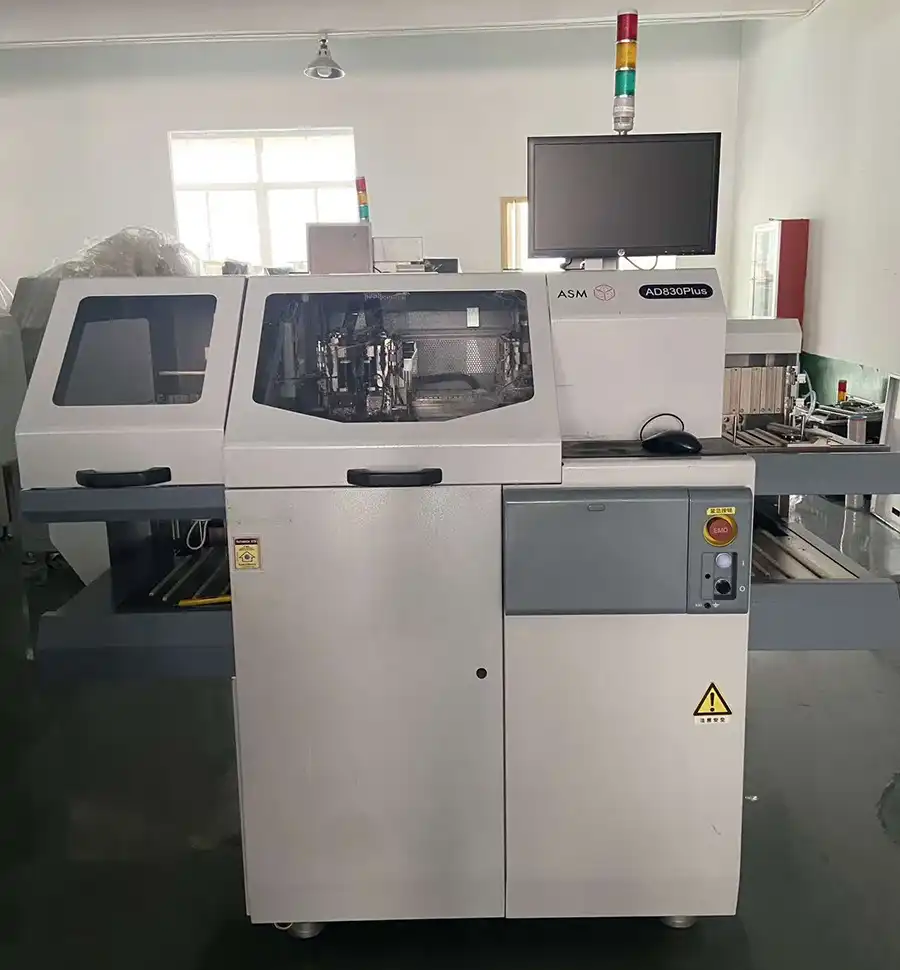
Silver-Epoxy Die Attach
ASM AD830 Plus
A fully automatic high-speed die bonder designed for wafer-to-leadframe silver-epoxy die attach, with programmable bonding, wafer alignment and inspection functions.
ASMPT Semiconductor Assembly Equipment
Explore ASM and ASMPT die bonder platforms by die attach process, material flow, package requirement and installed configuration. This page connects selected AD Series machines with practical equipment-selection, configuration-review and technical-support information.
Die presentation, wafer alignment and pickup-tool matching.
Epoxy, silver epoxy or another configuration-specific attach process.
Controlled pickup, transfer, orientation and placement.
Alignment, process recognition and bond-result verification.
Review selected ASM die bonding machines by platform direction. Exact process capability must always be confirmed from the installed machine configuration, tooling and production test.
A fully automatic high-speed die bonder designed for wafer-to-leadframe silver-epoxy die attach, with programmable bonding, wafer alignment and inspection functions.
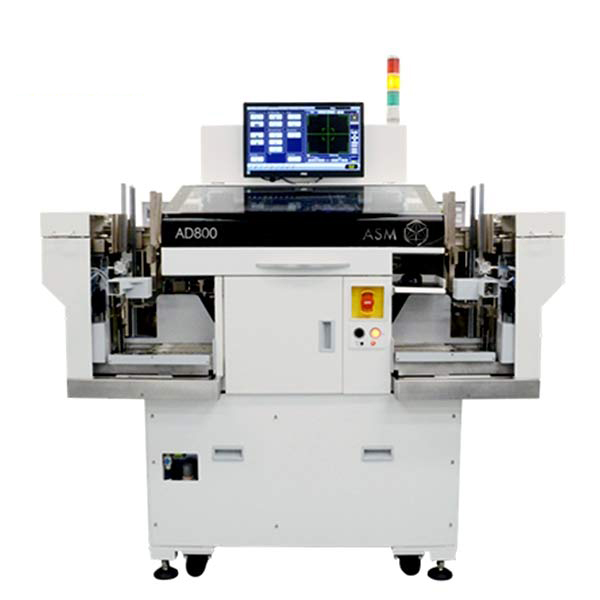
A mature automatic die bonding platform used in established semiconductor packaging environments. Tooling, software, material flow and installed modules should be verified individually.
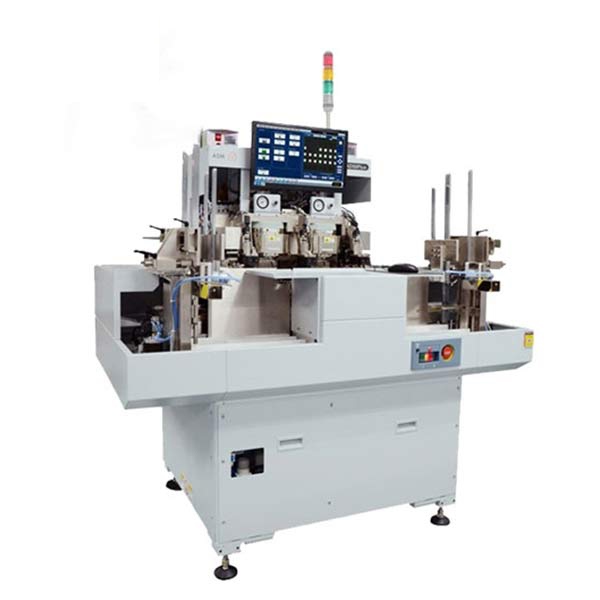
An ASM die bonding platform evaluated for precision-oriented and specialized packaging applications. Final suitability depends on the exact process and configured machine options.
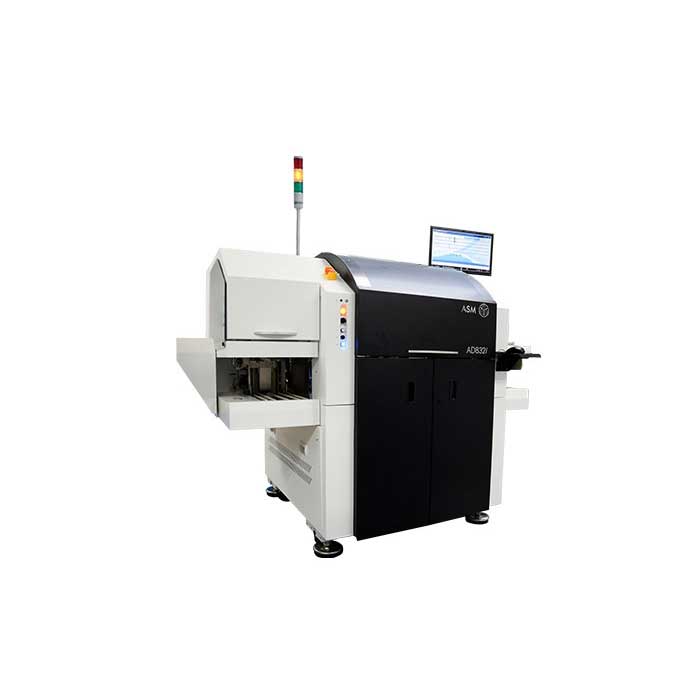
A configurable automatic die bonding system whose process range, material input and inspection capability must be confirmed from the specific installed machine build.
The correct machine depends on how the die is attached, how materials enter the system and what must be inspected before and after placement.
For packages using controlled epoxy deposits before die placement. Confirm dispensing method, material viscosity and curing requirements.
Used for wafer-to-leadframe processes requiring silver-epoxy dispensing or stamping before automatic die placement.
Requires process-specific heating, material handling and bonding control. Compatibility must be confirmed from the exact platform configuration.
Production output depends on die size, indexing, vision inspection, material loading and the complete bonding cycle.
Advanced, high-mix or unusual package formats require confirmation of tooling, optics, software and material-handling modules.
This comparison provides a practical starting point. It does not replace inspection of the exact available machine, serial number, modules and production configuration.
| Model | Platform Direction | Material Flow | Process Focus | Important Selection Note |
|---|---|---|---|---|
| ASM AD830 Plus | High-speed automatic die bonding | Wafer to leadframe | Silver-epoxy die attach | Confirm epoxy module, input system, wafer loader and tooling. |
| ASM AD800 | Mature automatic bonding platform | Configuration-dependent | Established semiconductor die attach | Verify legacy software, tooling and exact material-handling build. |
| ASM AD50Pro | Precision-oriented platform | Configuration-dependent | Specialized die attach applications | Confirm package suitability, installed options and process capability. |
| ASMPT AD832i | Configurable automatic platform | Configuration-dependent | Model-specific die bonding | Review the complete machine build, software and production test. |
Use the complete production requirement—not only the machine model—to select a suitable ASM die bonding platform.
Confirm epoxy, silver epoxy, eutectic, solder or another process before comparing machine models.
Provide die length, width, thickness, surface condition and pickup restrictions.
Confirm wafer size, ring or frame format, wafer map and automatic-loader requirements.
Review outer dimensions, indexing pitch, bond layout, magazine and support tooling.
Define alignment, orientation, bond-force and pre-bond or post-bond inspection needs.
Evaluate the complete cycle, material handling, inspection time and changeover frequency.
Confirm wafer loader, epoxy system, input elevator, output elevator, optics and software.
Review serial number, alarms, motion, vision, tooling, maintenance and production-test results.
Two machines with the same model designation can have different production capabilities. Confirm the complete machine build before purchasing.
Answers to common questions about ASM and ASMPT die bonding machines, model selection and used-equipment evaluation.
An ASM die bonder is used during semiconductor assembly to transfer a bare die from a wafer, waffle pack or another die source to a leadframe, substrate, package carrier or bonding surface. The machine coordinates die recognition, pickup tooling, motion control, bonding-material application, placement and inspection according to the production recipe.
Depending on the platform, it may perform die recognition, pickup, alignment, bonding-material application, placement, inspection and automatic material handling within one production system.
Model availability changes regularly. Selected platforms may include AD830 Plus, AD800, AD50Pro, AD832i and other configuration-specific ASM or ASMPT die bonding systems.
ASM, ASM Pacific Technology and ASMPT may appear in different machine generations, manuals and equipment records. The exact model, serial number and installed configuration are more important than the brand-name variation.
Start with the die attach process, die dimensions, wafer or die input, leadframe or substrate format, placement requirements, target output, inspection needs and required material-handling modules.
Yes, provided the machine configuration matches the product and its motion, vision, tooling, material handling and bonding process have been properly inspected and tested.
No. Process capability varies by platform, machine generation and installed options. The exact epoxy, heating, wafer, substrate, tooling and inspection configuration must be confirmed.
Provide the required model, die dimensions, wafer size, leadframe or substrate drawing, die attach process, target output, inspection requirements, preferred equipment condition and destination country.