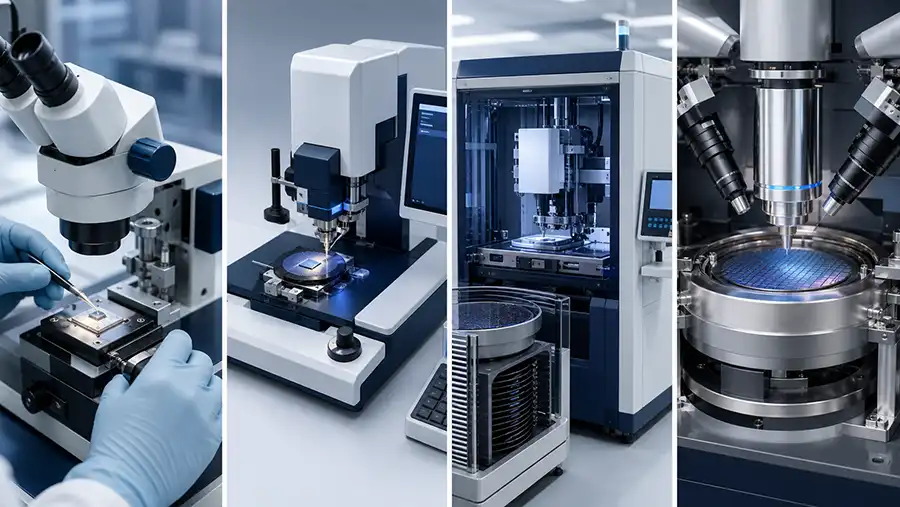
Die Bonding vs Wire Bonding: What Each Process Does
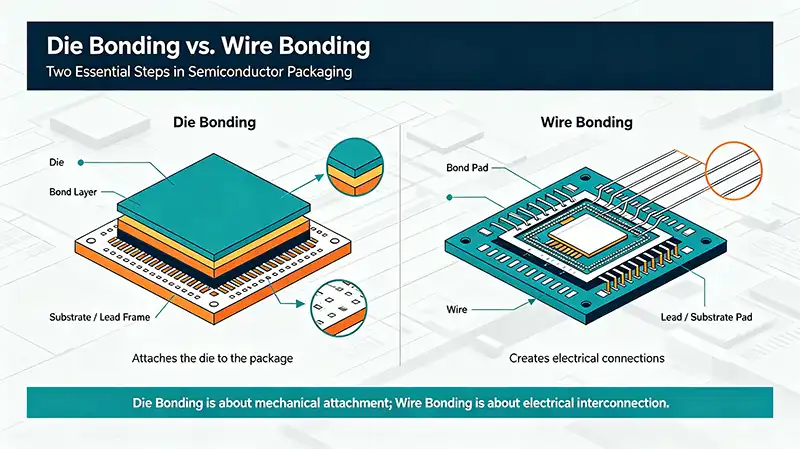
Die bonding fixes the chip to its carrier. Wire bonding connects it electrically. Learn how these two packaging steps differ, where each fails, and why.
Stay updated on the latest semiconductor backend equipment technologies, consumable innovations, and global support strategies.
Die bonding fixes the chip to its carrier. Wire bonding connects it electrically. Learn how these two packaging steps differ, where each fails, and why.
In-depth look at wafer backside grinding, dicing saw technology for SiC and GaN, tape mounting, and single-wafer cleaning. Learn how GK-SEMI equipment.
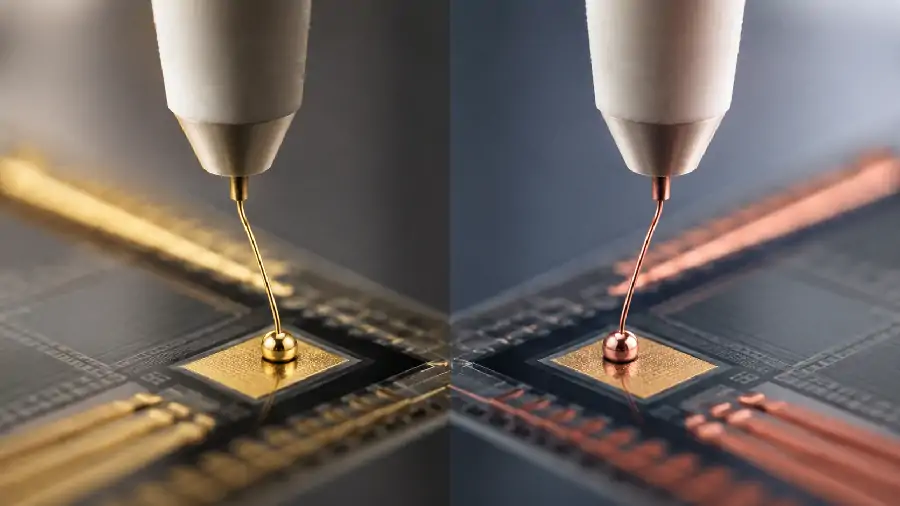
Compare copper and gold wire bonding by material behavior, bonder requirements, capillary changes, pad risks and qualification steps for Au-to-Cu conversion.
How much does a die bonder machine cost? Compare indicative prices for manual, automatic, used, refurbished, flip chip, and production die bonders.
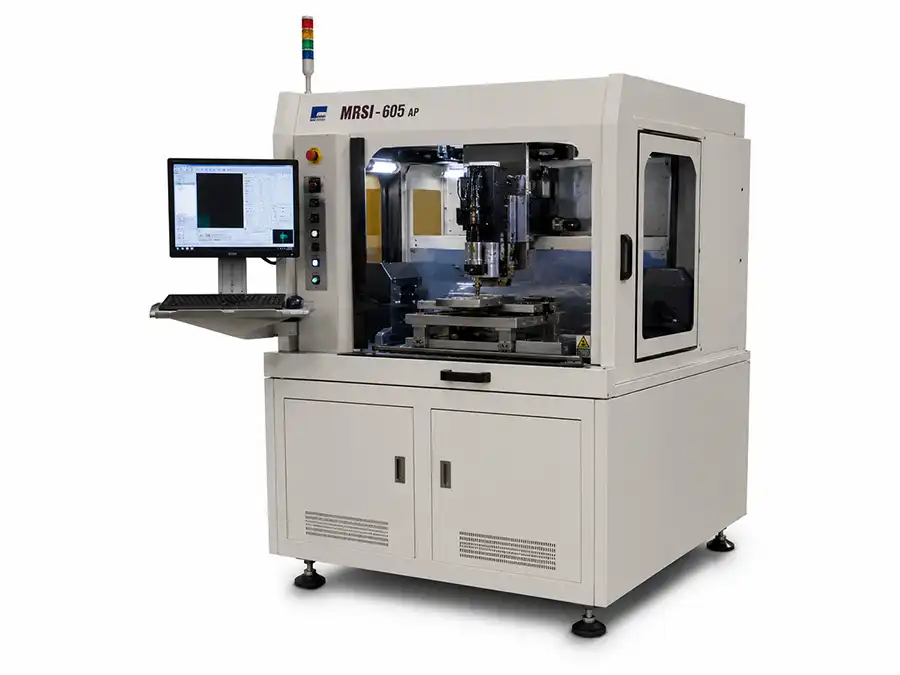
Learn how to evaluate a used MRSI-605 by checking machine identity, software recovery, tooling, process configuration, acceptance-test evidence and.
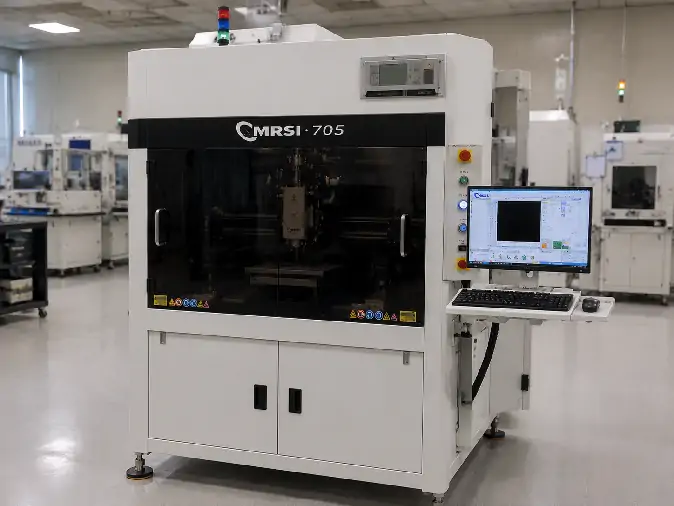
Learn how to evaluate a used MRSI-705 by verifying its identity, installed modules, tooling, software, condition, FAT evidence and delivery scope.
Explore how GK-SEMIs die bonders and flip chip bonders achieve sub-micron accuracy, high UPH, and void-free bonding for 2.5D/3D IC, automotive, and AI.
How GK-SEMI’s automatic probe stations, test handlers, ATE systems, and final packaging machines (trim & form, molding, laser marking) work together to.
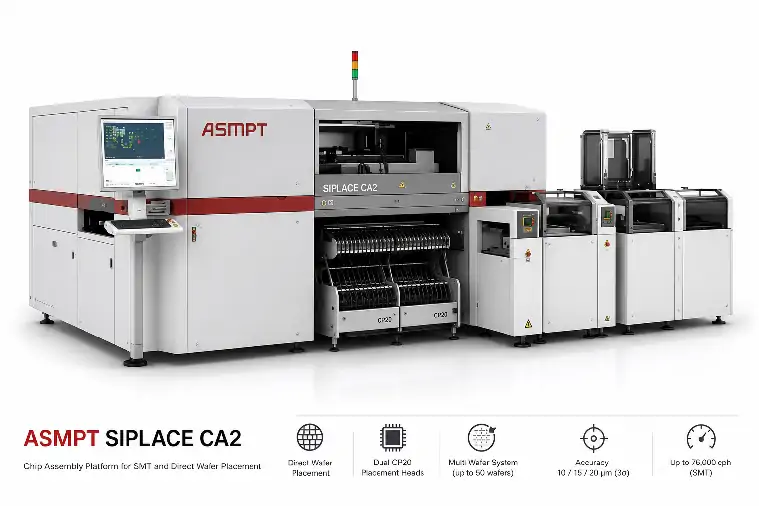
Explore the ASMPT SIPLACE CA2 specifications, CP20 heads, multi-wafer handling, applications, material-flow logic, and key configuration checks.
Diagnose wire bonding defects such as NSOP, ball lift, stitch lift, heel cracks and loop variation by separating material, tooling, process and machine.
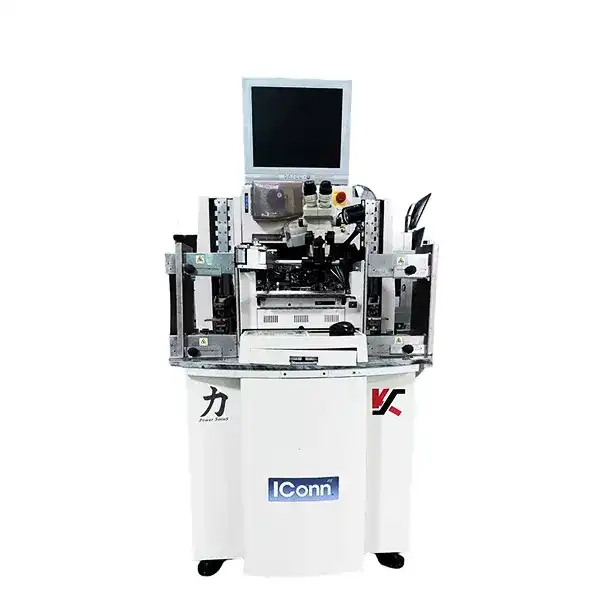
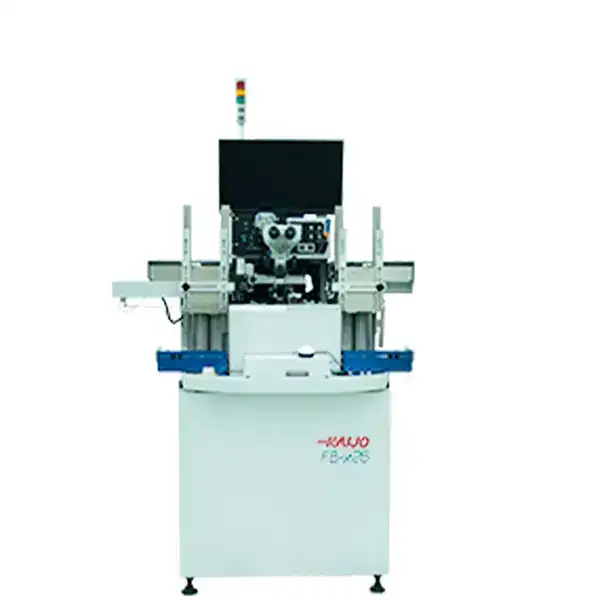
Used automatic wire bonder prices typically range from $22,000–$65,000 for mature gold/aluminum models (K&S 8028PPS, MAXUM Plus, ASMPT AB series, KAIJO FB) and $48,000–$120,000+ for newer fine-pitch copper-ready systems (K&S IConn ProCu, ASMPT Eagle AERO). Automatic die bonders range $28,000–$180,000+ depending on placement accuracy.
A thermosonic ball bonder uses a ceramic capillary to form gold or copper ball bonds omnidirectionally at ultra-high speed (ideal for IC, BGA, QFN, LED), whereas an ultrasonic wedge bonder uses a wedge tool to bond fine or heavy aluminum wire/ribbon at room temperature (essential for IGBT/SiC power modules, RF/microwave, and ultra-fine pitch).